Top China Plain Sock Machine Manufacturers for Sale

Time:2026-09-19 Author:Madeline
0%

China remains a major sourcing base for textile machinery, including equipment used in hosiery production. The International Textile Machinery Federation’s International Textile Machinery Shipment Statistics reports continuing global investment in knitting and related machinery, although shipment volumes fluctuate with economic conditions. Its data also shows that machinery demand is not evenly distributed across regions. This matters when evaluating a Plain Sock Machine for sale.

Market reports from Grand View Research and Fortune Business Insights describe steady long-term growth in the global socks market, supported by sportswear, private-label retail, and online apparel sales. These reports usually combine several sock categories, so their figures should not be treated as direct proof of plain sock machine demand. That limitation deserves attention.

A practical supplier review should examine output speed, needle specifications, cylinder options, yarn compatibility, and control-system reliability. Ask for recent production videos. Request sample socks with visible stitch quality, clean cuffs, and consistent toe closing. A machine that looks polished in a showroom may perform differently during continuous production.

Real experience matters.

Reliable Chinese manufacturers should provide technical manuals, spare-parts lists, installation guidance, and responsive after-sales support. Factory audits, customer references, and documented testing add stronger evidence than catalog claims. Energy use also deserves comparison, especially for factories running multiple machines daily. The cheapest offer may become expensive through downtime, rejected socks, or difficult maintenance. Even experienced buyers can overlook these costs. Therefore, this guide compares leading China Plain Sock Machine manufacturers through measurable specifications, service capability, production evidence, and long-term operating value. Some information may change quickly, so buyers should verify current certifications, delivery schedules, and warranty terms before purchasing.

Top China Plain Sock Machine Manufacturers for Sale

What Is a Plain Sock Machine?

Top China Plain Sock Machine Manufacturers for Sale

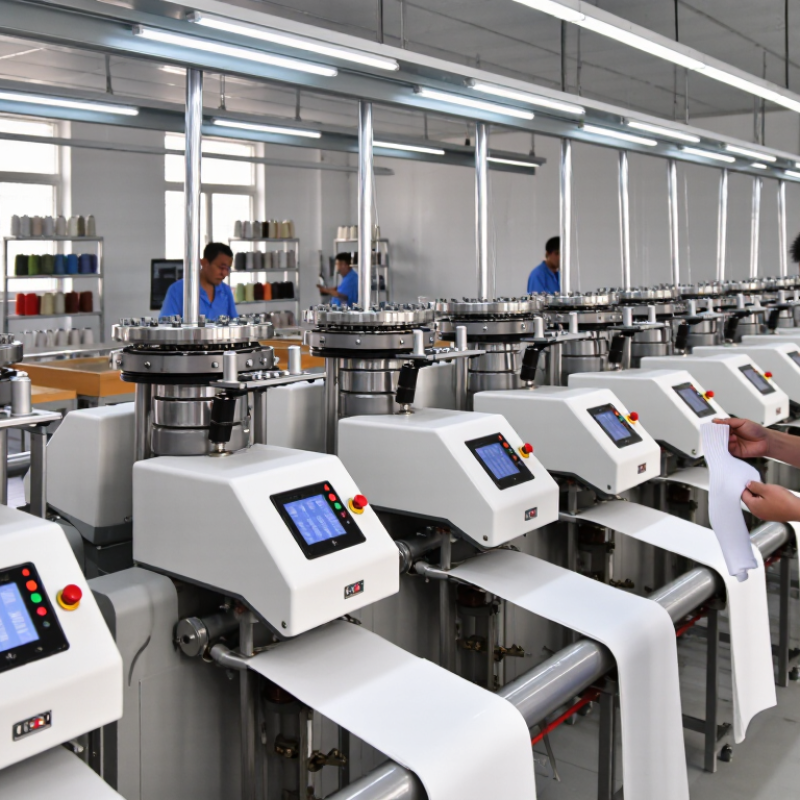
A plain sock machine is a circular knitting machine designed to produce socks with a simple, consistent fabric structure. It uses a cylinder, needles, cams, feeders, and computerized controls to form the tube, heel, and toe. Some models also support elastic cuffs and basic color changes. “Plain” does not mean primitive. A stable machine still requires accurate needle timing and controlled yarn tension.

In practical factory testing, operators often inspect the first dozen socks for loose loops, uneven cuffs, and toe marks. Small errors become expensive during long production runs. According to Grand View Research’s 2024 hosiery market assessment, the global hosiery market was valued at about US$152.7 billion in 2022 and is projected to grow through 2030. This demand encourages buyers to compare output, gauge options, energy use, and maintenance access before purchasing.

ITMF machinery statistics

ITMF machinery statistics also show continued investment in circular knitting equipment, although shipment figures vary by region and machine category. That detail matters. A supplier’s claimed speed may not match real production with thicker yarn or complex sizing. I would request a sample run, inspect the knitting surface closely, and ask for documented failure rates. The cheapest option can become costly.

Key Features of Modern Plain Sock Machines

Top China Plain Sock Machine Manufacturers for Sale: Key Features of Modern Plain Sock Machines

Modern plain sock machines now combine computerized control, flexible gauge settings, and faster pattern-free production. Buyers should examine cylinder size, needle quality, servo accuracy, and daily output. These details affect fabric density, heel shape, and machine stability. According to ITMF’s 2023 International Textile Machinery Shipment Statistics, circular knitting machinery shipments weakened after earlier investment growth. This signals a cautious market, where reliable performance matters more than impressive speed claims.

Energy control is another important feature. Efficient servo motors, automatic lubrication, and standby modes can reduce operating waste. Textile Exchange’s 2024 Materials Market Report estimated global fiber production at 132 million tonnes in 2023. That scale increases pressure for lower waste and longer machine service life. A faster machine is not always better. Poor tension settings may create seconds of extra output, but also defective socks. Buyers should request trial samples under real yarn conditions. Maintenance access matters too. If technicians cannot reach sensors or needles quickly, downtime becomes expensive.

Tips: Compare tested output, not catalogue speed. Ask for noise readings, power consumption, spare-part availability, and training terms. Check whether the controller records faults clearly. Some advanced functions look useful but remain unused by operators. That is a purchasing mistake worth reviewing. Also test several yarn counts before choosing a machine. A plain sock line needs consistency, not excessive complexity. Reports from ITMF and Textile Exchange provide useful market context, but factory trials should guide the final decision.

Top Chinese Plain Sock Machine Manufacturers

China’s plain sock machine manufacturers serve a large, price-sensitive hosiery sector. Grand View Research valued the global hosiery market at about USD 93.5 billion in 2023. It also projects steady growth through 2030. This demand supports continued investment in Chinese knitting equipment.

A capable manufacturer should explain cylinder diameter, needle count, gauge, output speed, and power consumption clearly. Plain sock production often requires stable feeding and accurate toe-closing performance. Ask for test samples using your actual yarn. A factory video is useful, but it is not proof. Inspect the assembly area, spare-parts system, and technician training records. ISO 9001 certification can support process control, yet certification alone cannot confirm machine durability.

The ITMF International Textile Machinery Statistics report tracks global knitting-machine shipments and shows that investment changes with textile demand and economic confidence. Chinese manufacturers often compete through flexible customization, accessible components, and shorter communication channels. However, the lowest quotation may hide software limits, weak documentation, or expensive maintenance. I have found that small details matter: loose sensor cables, unclear alarms, and poorly translated manuals can delay production. That judgment may be imperfect, but it deserves attention. Compare at least three manufacturers using the same technical specification sheet, warranty terms, acceptance test, and delivery schedule. A reliable supplier should provide measurable claims, not only attractive production numbers.

Top China Plain Sock Machine Manufacturers for Sale - Top Chinese Plain Sock Machine Manufacturers

Comparative overview of common plain sock machine configurations and purchasing specifications

Machine Configuration Typical Cylinder Diameter Typical Needle Range Common Output Capacity* Suitable Sock Types Key Automation Features Main Buying Considerations
Single-cylinder plain sock machine 3.5–4.5 inches 84–220 needles Approximately 250–400 pairs per 24 hours Athletic, casual, school and basic everyday socks Electronic pattern control, automatic stop sensors and programmable knitting cycles Gauge compatibility, yarn-feeding accuracy, spare-part availability and operator training
Single-cylinder plain sock machine with auto-linking preparation 3.5–4.5 inches 96–200 needles Approximately 220–360 pairs per 24 hours Smooth-toe and standard knitted socks requiring reduced finishing work Automatic toe-closing preparation, yarn break detection and touchscreen settings Toe quality, compatibility with a separate toe-closing unit and finishing-line layout
Double-cylinder plain sock machine 3.5–4.5 inches 84–200 needles Approximately 180–320 pairs per 24 hours Ribbed, structured and reversible socks Electronic cylinder selection, automatic color change and fault monitoring Mechanical complexity, maintenance skill, cylinder alignment and fabric uniformity
Fine-gauge plain sock machine 3.5–4.0 inches 156–240 needles Approximately 180–300 pairs per 24 hours Dress, business, lightweight and high-density cotton socks Precise stitch-density control, electronic yarn tension and programmable welt settings Needle quality, yarn suitability, temperature control and fabric inspection standards
Medium-gauge plain sock machine 3.5–4.5 inches 96–168 needles Approximately 220–380 pairs per 24 hours General-purpose cotton, polyester and blended socks Automatic pattern storage, yarn-break alarms and adjustable stitch length Balance between production speed, yarn flexibility, energy use and ease of operation
Terry-compatible plain sock machine 3.5–4.5 inches 84–200 needles Approximately 180–320 pairs per 24 hours Sports, work, hiking and cushioned everyday socks Selectable terry zones, electronic sinker control and programmable foot cushioning Loop stability, yarn consumption, cleaning requirements and compatibility with thick yarns
High-speed computerized plain sock machine 3.5–4.5 inches 96–220 needles Approximately 300–450 pairs per 24 hours Large-volume basic socks with repeatable specifications Servo drive, touchscreen interface, automatic fault records and centralized parameter management Actual production testing, downtime rate, power consumption and after-sales response time
Purchasing note: Output figures are typical estimated ranges for standard plain-sock production under stable operating conditions. Actual capacity depends on needle count, sock size, yarn composition, pattern complexity, machine speed, operator skill and finishing requirements. Request a sample-production test, utility specification, warranty terms and spare-parts list before placing an order.

How to Compare Models, Prices, and Production Capacity

When comparing China plain sock machine manufacturers for sale, start with the model’s actual production purpose. A machine for basic cotton socks may not suit sports, thermal, or reinforced designs. Check cylinder diameter, needle count, gauge, and compatible yarn types. These details affect size range, fabric density, and pattern flexibility. Do not trust the brochure alone. Ask for recent production videos and sample socks made with similar yarn. Small differences become obvious after washing.

Price should include more than the machine itself. Request a written quotation covering installation, spare needles, training, packaging, and shipping. A cheaper model may require frequent manual adjustments or costly replacement parts. Calculate cost per pair, not only the purchase price. Consider electricity use, labor needs, maintenance intervals, and expected downtime. Numbers can mislead. I have seen buyers focus on speed while overlooking changeover time.

Production capacity needs careful verification. Ask whether the stated output is based on 24-hour operation, a specific sock size, or ideal yarn conditions. Compare usable output after trimming, inspection, and machine stops. A practical test should run several hours with your intended materials. Record pairs per hour, defect rates, and operator workload. Visit a working factory when possible, and speak with technicians rather than only sales staff. Leave room for uncertainty. Real production is rarely as smooth as a demonstration. Reliable suppliers should explain limitations clearly, provide service response times, and document warranty terms in plain language.

Buying Considerations for International Customers

Top China Plain Sock Machine Manufacturers for Sale

International buyers should compare machines by output, not catalog price. ITMF’s 2023 International Textile Machinery Shipment Statistics recorded nearly 26,000 large circular knitting machines shipped worldwide. This figure signals active investment, but it is not a direct measure of plain sock machines.

Ask suppliers for cylinder diameter, gauge, socks per hour, power consumption, and tested fabric samples.

A machine producing 300 pairs daily may perform differently with cotton, polyester, or blended yarn.

Check the supplier’s export experience carefully. Use UN Comtrade data under HS 8447 to review machinery trade flows and identify common importing markets. Confirm the correct customs classification with your broker.

Request serial-number photos, electrical diagrams, spare-parts lists, and a video acceptance test. The machine should match your local voltage and frequency. Small details matter.

Warranty language deserves attention. Define response times, remote troubleshooting, replacement-part delivery, and technician costs. ISO 9001 certification can support process control, but it does not guarantee knitting quality.

Inspect needle movement, cylinder wear, sensor accuracy, and noise during a live trial. Ask for production records from similar yarns. I would not trust polished videos alone.

A low quote may hide expensive downtime. My own buying mistake would be focusing too heavily on unit price. Reliability, training, and accessible parts often decide the real cost over five years.

FAQS

How should I compare plain sock machine models?

Match the machine to your product. Basic cotton socks need different settings than sports or thermal socks. Check cylinder diameter, needle count, gauge, and yarn compatibility. Ask for recent videos and sample socks using similar yarn. Brochures can look better than reality.

What should a machine quotation include?

Request installation, spare needles, training, packaging, and shipping in writing. Also ask about electrical requirements and replacement parts. A low price may exclude important costs. Read every line.

How can I calculate the real machine cost?

Calculate the cost per usable pair. Include electricity, labor, maintenance, changeover time, and downtime. A fast machine may lose time during adjustments. I once focused too much on unit price. That was not a smart comparison.

How do I verify production capacity?

Ask whether output means continuous operation, one sock size, or ideal yarn conditions. Run the machine for several hours with your materials. Record pairs per hour, defects, stops, and operator workload. Demonstrations are usually smoother.

Why should I test different yarn types?

Cotton, polyester, and blended yarns can produce different results. Yarn affects fabric density, machine speed, and defect rates. Request tested samples before ordering. Wash the samples. Small problems may appear later.

What should international buyers check before shipping?

Confirm voltage, frequency, packaging, shipping terms, and customs classification. Ask for serial-number photos and electrical diagrams. A local broker can verify import details. Small electrical mistakes cause large delays.

How can I evaluate supplier reliability?

Check export experience and request production records from similar machines. Speak with technicians, not only sales staff. Visit a working factory when possible. Ask how quickly support replies. Friendly promises are not enough.

What warranty details deserve attention?

Confirm response times, remote troubleshooting, spare-part delivery, and technician costs. Ask when warranty coverage begins. Require plain-language documents. Certification may show process control, but it does not guarantee knitting quality.

Which machine parts should I inspect during a live trial?

Watch needle movement, cylinder wear, sensor accuracy, and operating noise. Check fabric consistency during several hours. Record manual adjustments and stopped-machine time. I would not trust polished videos alone.

What production numbers should I compare?

Compare usable output, not catalog output. Remove defective pairs, trimming time, inspections, and machine stops. Measure performance with your intended sock size and yarn. Leave room for uncertainty. Real production is rarely perfect.

Conclusion

A Plain Sock Machine is specialized equipment designed to produce basic socks with efficient knitting, shaping, and finishing functions. Modern models typically offer programmable controls, stable operating speeds, flexible size settings, automatic pattern management, and energy-conscious performance. These features help manufacturers maintain consistent quality while adapting to different yarn types, sock sizes, and production requirements.

China has become an important source of plain sock machinery, offering a broad range of configurations for small workshops, growing factories, and high-volume production lines. When comparing models, buyers should evaluate machine speed, needle options, automation level, output capacity, maintenance needs, spare-parts availability, and total operating cost rather than focusing only on the purchase price. International customers should also confirm voltage compatibility, technical documentation, inspection procedures, packaging standards, delivery schedules, warranty terms, and after-sales support. A careful comparison of performance, reliability, service, and long-term value can help buyers select equipment that matches their production goals and budget.

Madeline

Madeline

Madeline is a dedicated marketing professional with a wealth of expertise in our company's core offerings. With a keen understanding of the industry, she brings a unique perspective to her role, consistently delivering high-quality content that highlights the superior aspects of our products. As......