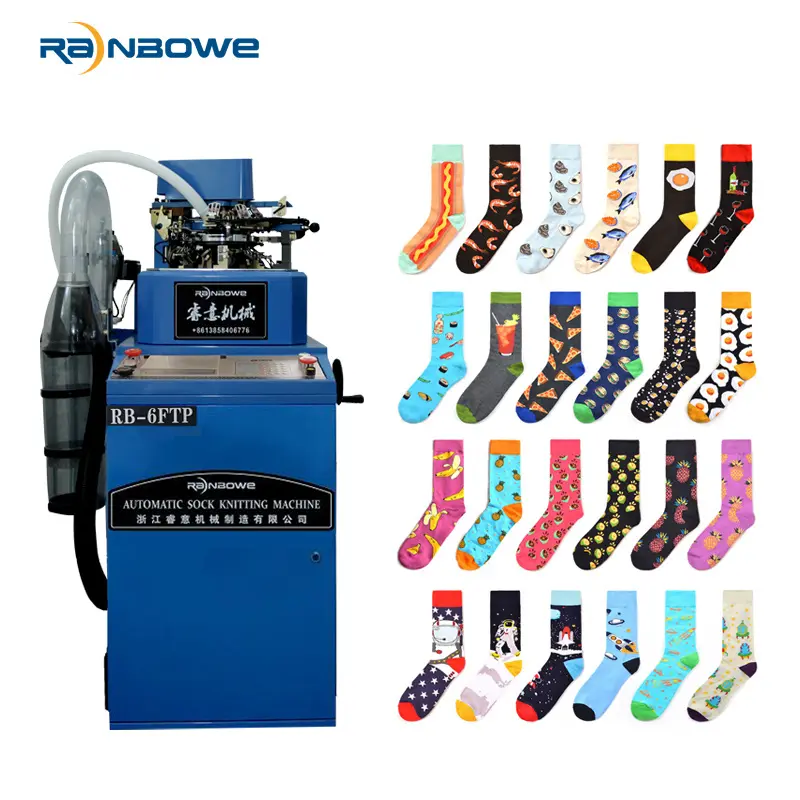
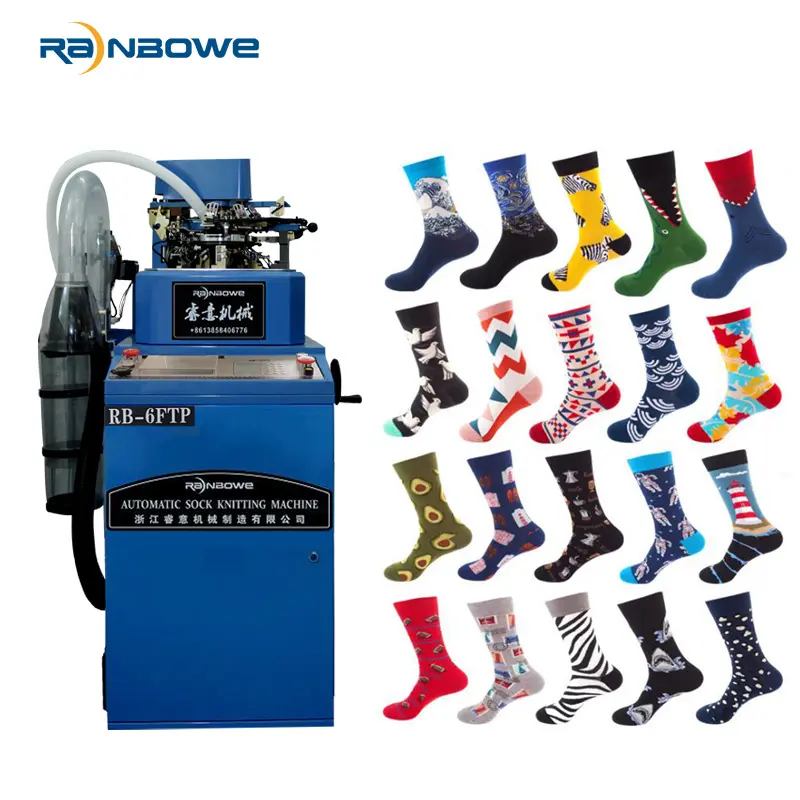
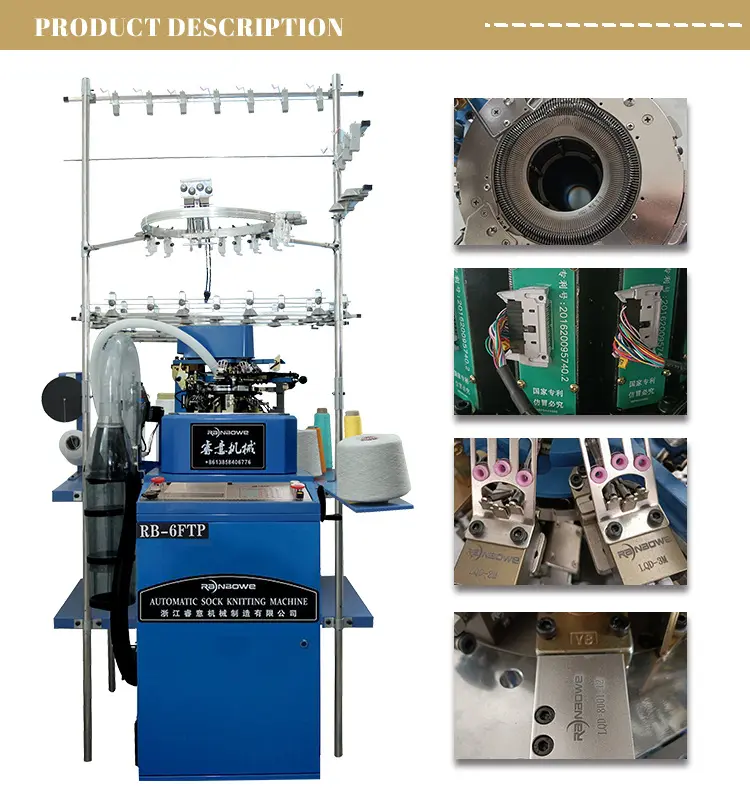
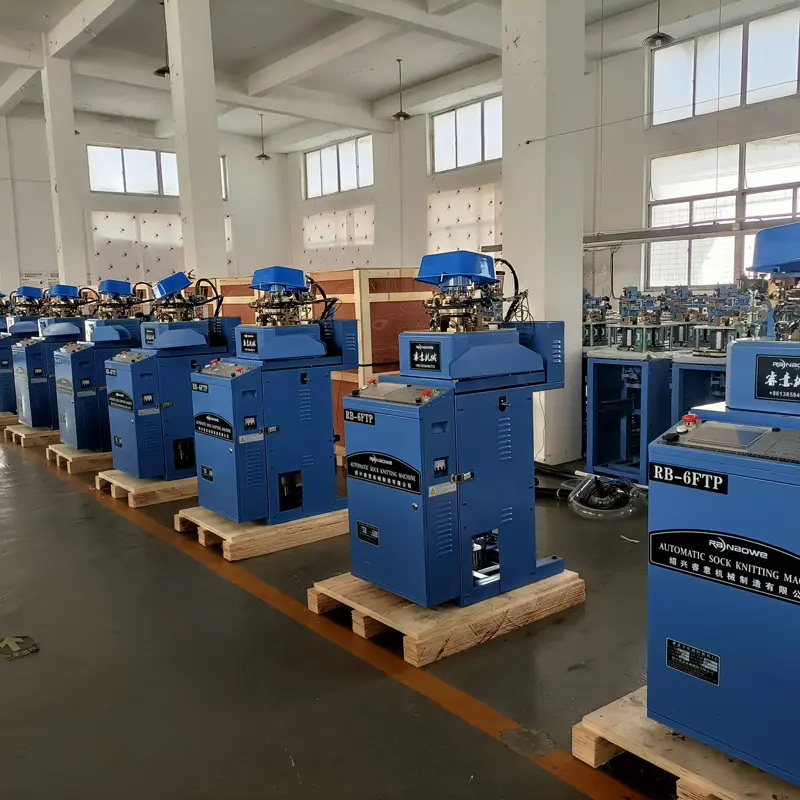
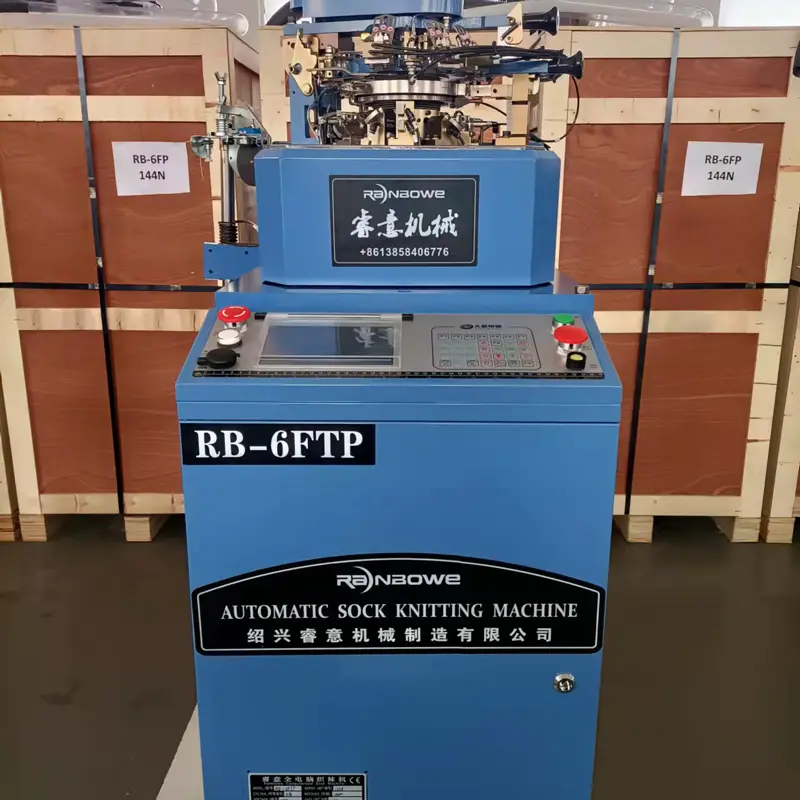
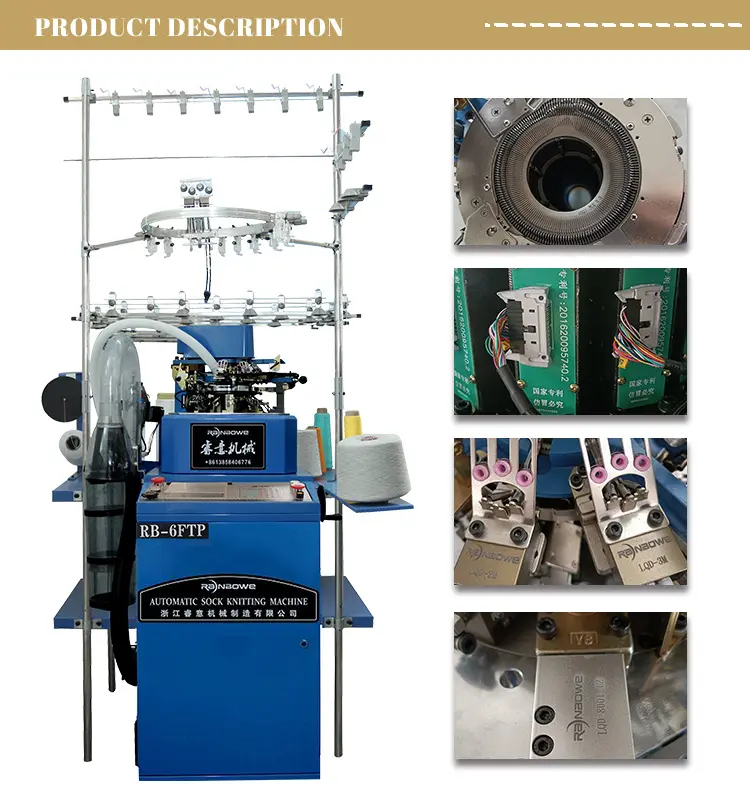
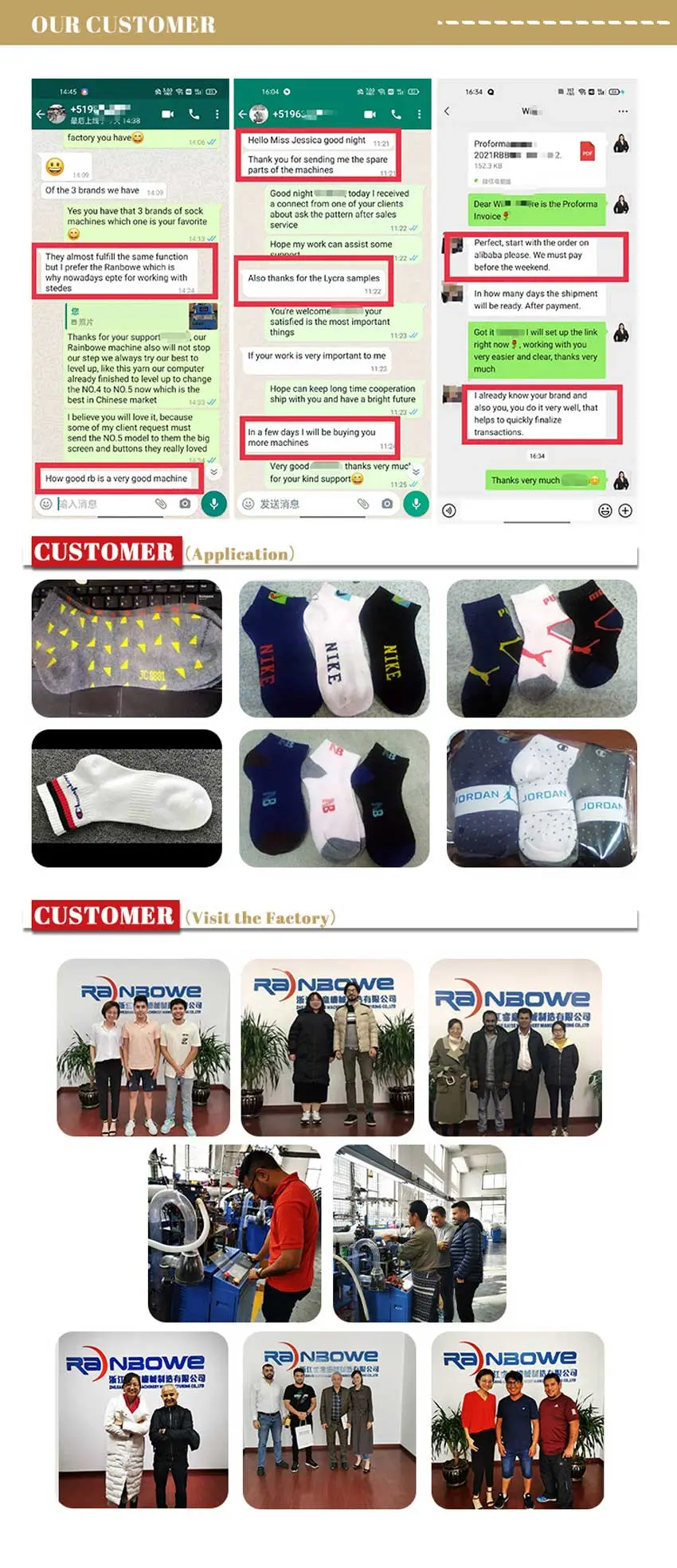
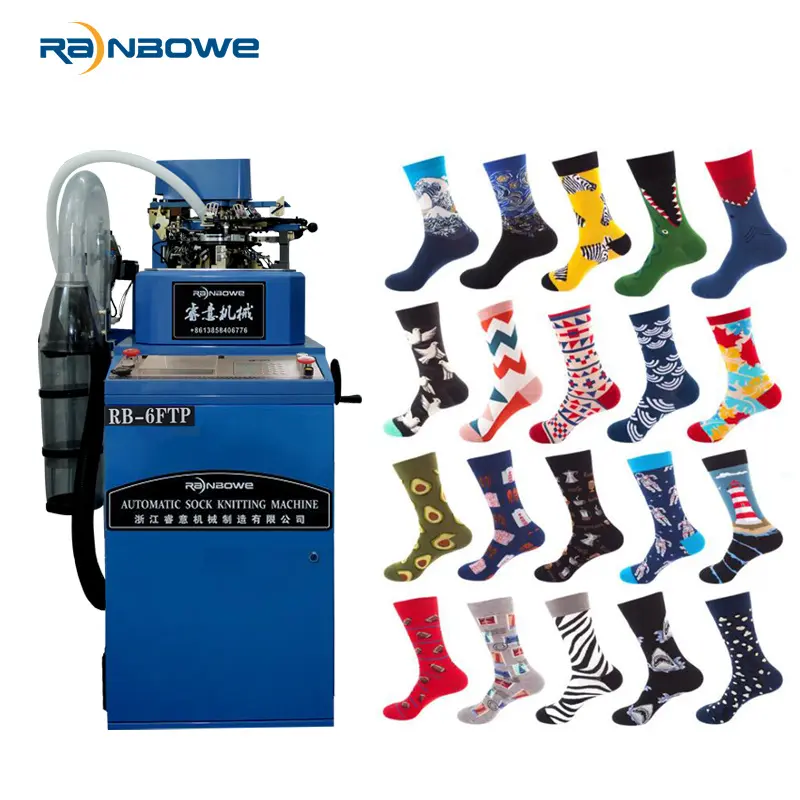
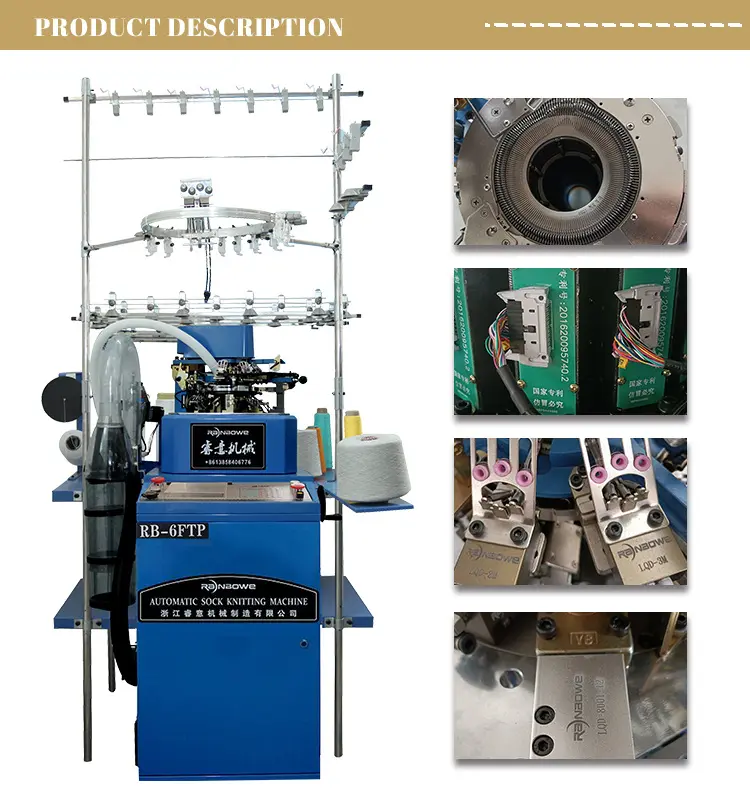
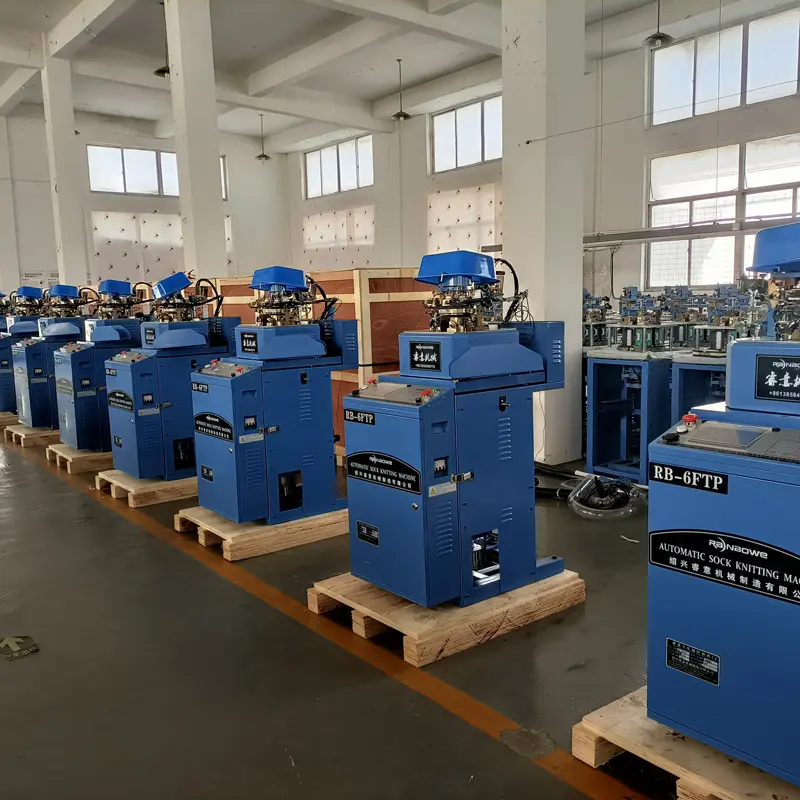
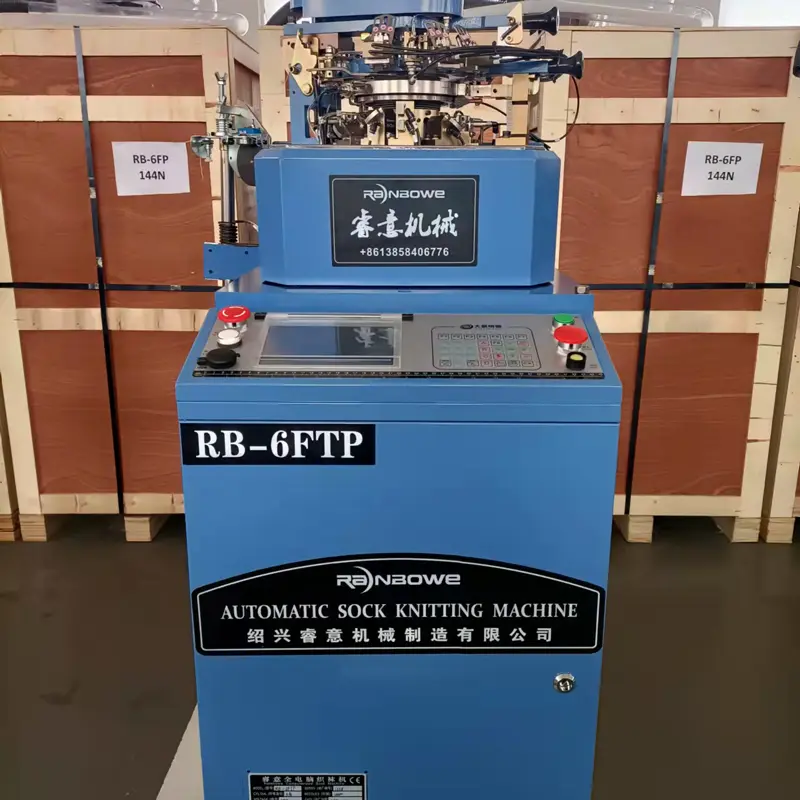
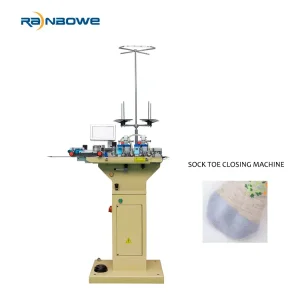
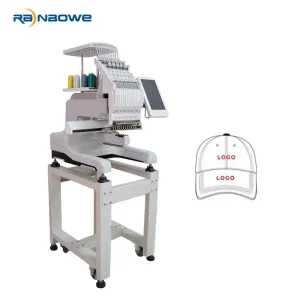
We always stick to the principle "Quality First, Prestige Supreme". We are fully committed to providing our clients with competitively priced quality products, prompt delivery and professional service for high-performance sock production equipment. Seeing believes! We sincerely welcome new global partnerships to build organization associations and consolidate long-established prospects.
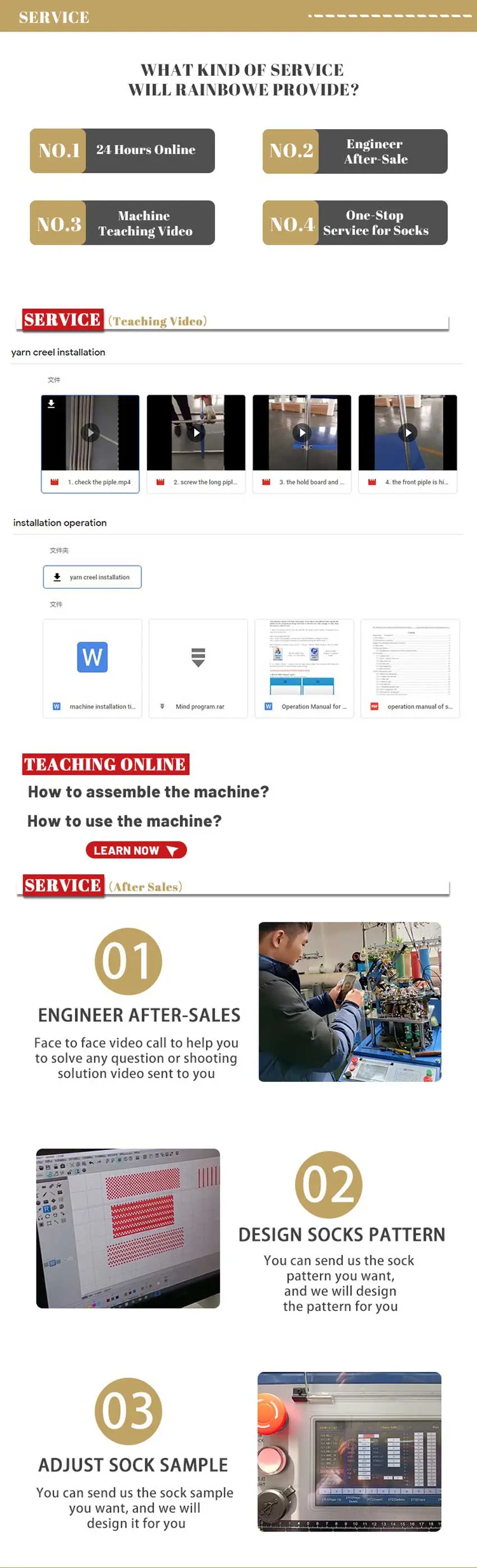
Rich project management experience and a one-to-one service model ensure high-importance communication and a deep understanding of customer expectations. We specialize in production with extensive export experience to support your business requirements globally.
Frequently Asked Questions
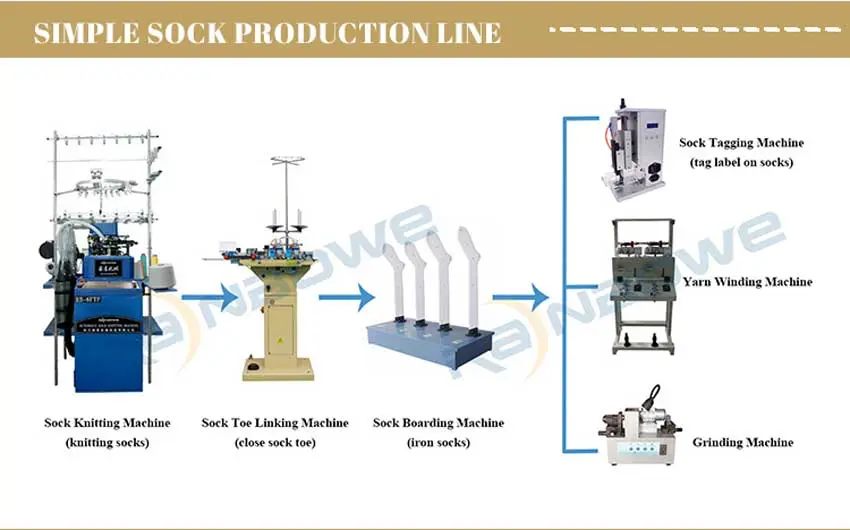
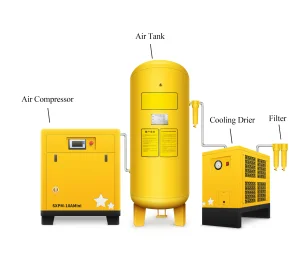
What auxiliary equipment is needed for a sock production line?
You will need an Air Compressor (for compressed air), Storage Tank, Filter, Cooling Drier (to remove moisture), Stabilizer (for voltage stability), and a Suction Fan Motor. The specific power and size depend on the number of machines in your line.
What raw materials are required to make socks?
- Main Yarn: Spun Polyester, Cotton, Acrylic, Woolen, etc.
- Stretch Material: Air Covered Spandex or Spandex Covered Yarn.
- Welt: Rubber.
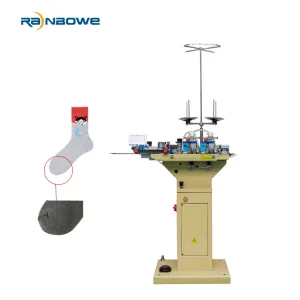
- Toe Sewing: Nylon Yarn.
How many machine sets can fit in a standard shipping container?
With packaging: 18 sets fit in a 20ft container, and 39 sets in a 40ft container. Without packaging: 28 sets fit in a 20ft container, and 56 sets in a 40ft container.
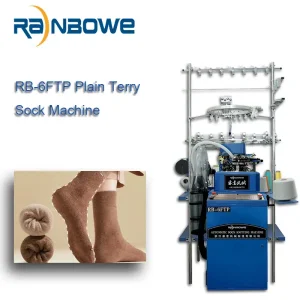
What is the daily production capacity of the RB-6FTP machine?
The machine can produce between 250 to 400 pairs of socks every 24 hours. The exact output depends on the size and complexity of the socks being manufactured.
What types of socks can be produced with this equipment?
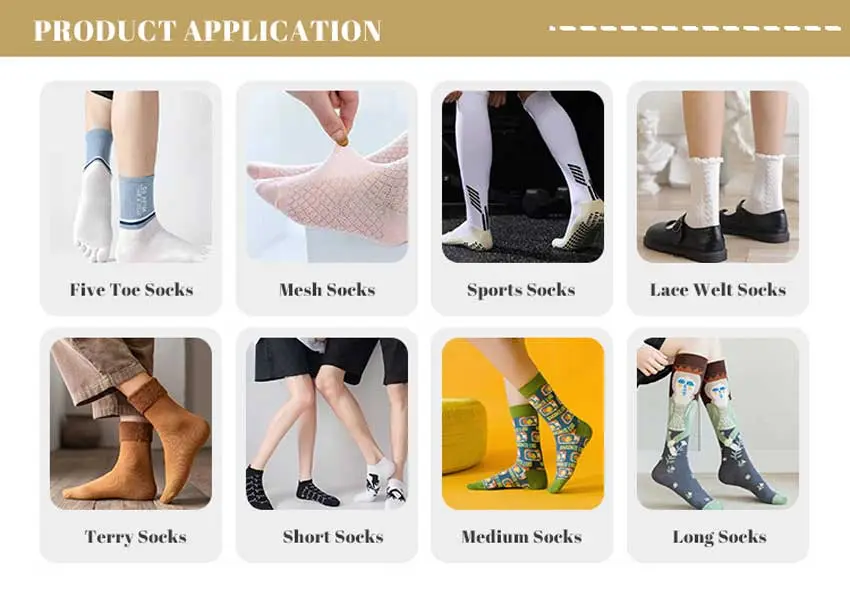
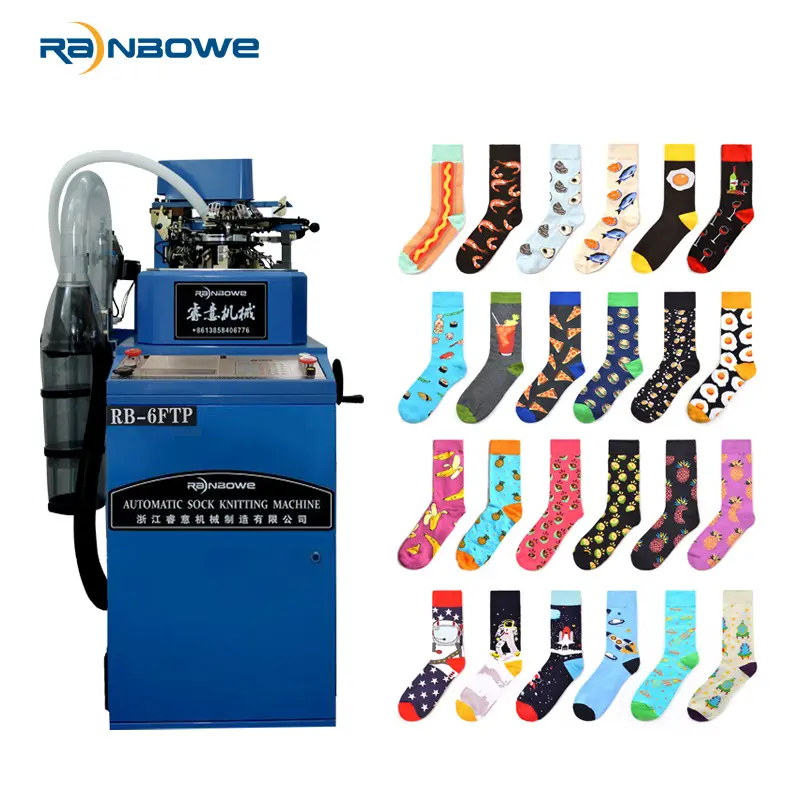
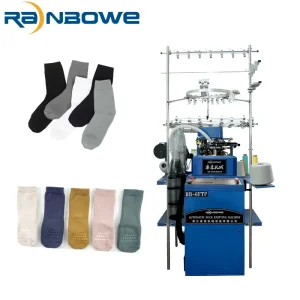
The machine is versatile and can produce Plain and Terry socks for all ages (baby to adult). It supports various styles including sports, fashion, business, football, and technical functional socks like 3D or Jacquard designs.
What are the electrical requirements for installation?
The machine is compatible with 380V or 220V power supplies, allowing for flexibility based on your local industrial power standards.
 Rainbowe